


21-4-2026
Fish in Fifteen Minutes: The Case for Confident Seafood Cooking
The Fear Factor
Fish and shellfish suffer more than any other protein from the home cook's instinct to play it safe. With a chicken thigh, caution costs you tenderness. With fish, it costs you everything.
A well-cooked piece of fish is one of the most elegant things you can make in a home kitchen. An overcooked piece is dry, chalky, and faintly bitter. The difference between the two is often less than ninety seconds.
The Two-Minute Rule
For most fish fillets cooked in a hot pan — salmon, sea bass, cod, mackerel — the cooking time is startling in its brevity. A skin-on salmon fillet, 3–4cm thick, cooked skin-side down needs approximately three to four minutes on the skin side and one to two on the flesh side. That's it. If you're unsure, remove it a beat early. Residual heat will carry it through.
Fish is done when it flakes — when you press gently with a fork and the flesh separates along its natural seams with no resistance.
Three Mistakes Made Constantly
- Cold fish in a cold pan. Take fish out of the fridge twenty minutes before cooking. Room-temperature fish cooks more evenly.
- Wet fish in any pan. Pat the surface bone dry with kitchen paper before it touches heat. Moisture steams rather than sears — you lose the crust, you lose the flavour.
- Crowded pan. One piece at a time, or two with space between. Steam escapes only when there's room for it.
Shellfish: Even Faster
Prawns, scallops, mussels — they all tell you when they're done. Prawns turn pink and curl into a C shape. Scallops develop a golden crust and become just firm to the touch. Mussels open.
The reward is a plate that's fast enough for a weeknight and elegant enough for company.
Recept
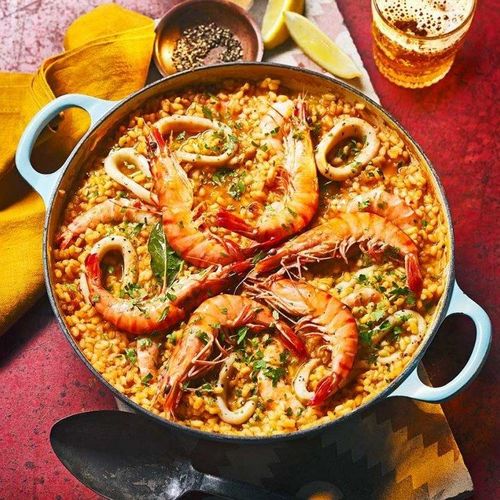
Arroz con gambas y calamar
Een Spaans zeevruchten gemaakt met raw king garnalen, saffron en paella rijst.